 true77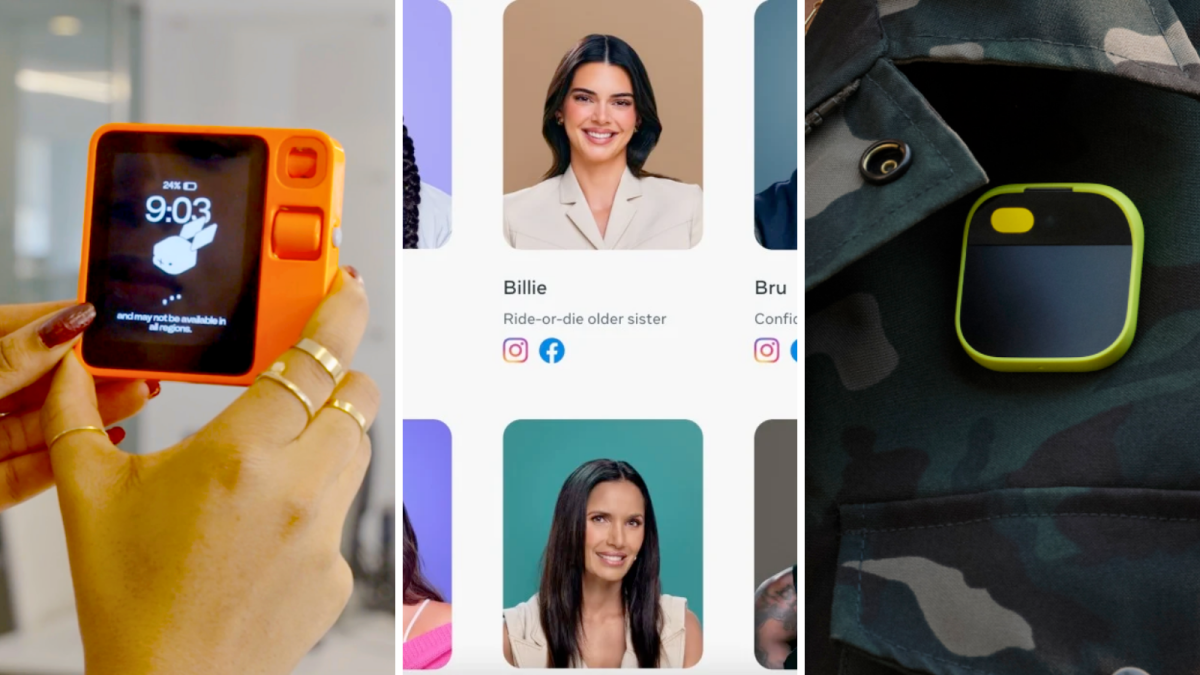
Artificial intelligence is gaining popularity worldwide, as corporations rush to incorporate machine learning technology into their products. However, this enthusiastic approach can sometimes lead to the application of tech that may not be a good fit. With companies eager to showcase their use of AI, the focus has shifted from whether they can use the tech to whether they should.
AI Products that Failed in 2024
The Rabbit r1 AI voice assistant made a promising debut in January, selling 20,000 units within two days. Priced at $200, this handheld device offered a range of features, including navigating apps, taking photos, recommending recipes, and summarizing text. Despite its initial hype, the Rabbit r1 suffered from bugs, underwhelming performance, and a major security flaw that exposed user data. Its reputation took a hit, making it challenging to recover.
Meta’s AI Personas, chatbots featuring celebrity likenesses, failed to impress users and were discontinued within a year. These chatbots, which did not truly replicate the personalities of the celebrities they resembled, were deemed awkward and unsettling. Meta’s investment in securing celebrities’ likenesses did not translate into a successful product, leading to the project’s early demise.
Humane’s Ai pin, a $699 wearable AI device that operated independently of a smartphone, aimed to revolutionize daily interactions with technology. However, the product faced a high rate of returns, indicating a lack of user satisfaction. Despite the intention to integrate AI seamlessly into daily life, the Ai pin failed to gain traction in the market.
Humane’s Ambitious AI Pin Faces Criticism
To that end, Humane’s Ai pin went all in on futuristic but uncommon design choices. Rather than a screen, the ostensible “smartphone killer” has a tiny projector for your palm, and though it has a touchpad, the vast majority of operation is performed via voice commands. Designed to attach to your clothes like a brooch, Humane’s Ai pin can take photos and short videos, answer questions, and send messages — basically everything a phone can already do, just without a screen.
Challenges and Criticisms
Yet despite Humane’s lofty sci-fi ambitions, issues with the Ai pin began to appear before the devices were even released. One of Humane’s own promotional videos showed the Ai pin answering two questions incorrectly, an embarrassing mistake which prompted the company to quickly update the clip. Then the Ai pin began shipping in April, and the reviews started coming in. A consensus soon emerged that while Humane’s Ai pin had some cool ideas in theory, in practice it’s slow and frustrating to use. Music playback was broken (and only supported Tidal anyway), the palm projector was terrible and unreadable in bright light, and the device heated up to an uncomfortable level, which is not ideal on any gadget much less a wearable. The Humane Ai pin also has a mandatory $24 monthly subscription, turning into a useless lump of aluminium and Gorilla Glass without it.
Struggles and Decline
Within mere weeks, Humane was reportedly searching for a buyer, hoping to sell for between $750 million and $1 billion. It’s an ambitious goal considering the scathing reviews of its only product. Humane’s troubles didn’t end with the Ai pin’s launch either. The company subsequently sent an email to customers telling them not to use the Ai pin’s charging case, as a “quality issue” with the battery made it a potential “fire safety risk.” By August, Humane’s Ai pins were reportedly being returned at a pace that outmatched its sales, with only around 8,000 still left in the wild. Humane slashed the Ai pin’s price to $499 last month, but at this point, grabbing one for even a tenth of that still doesn’t seem worth it.