
 true77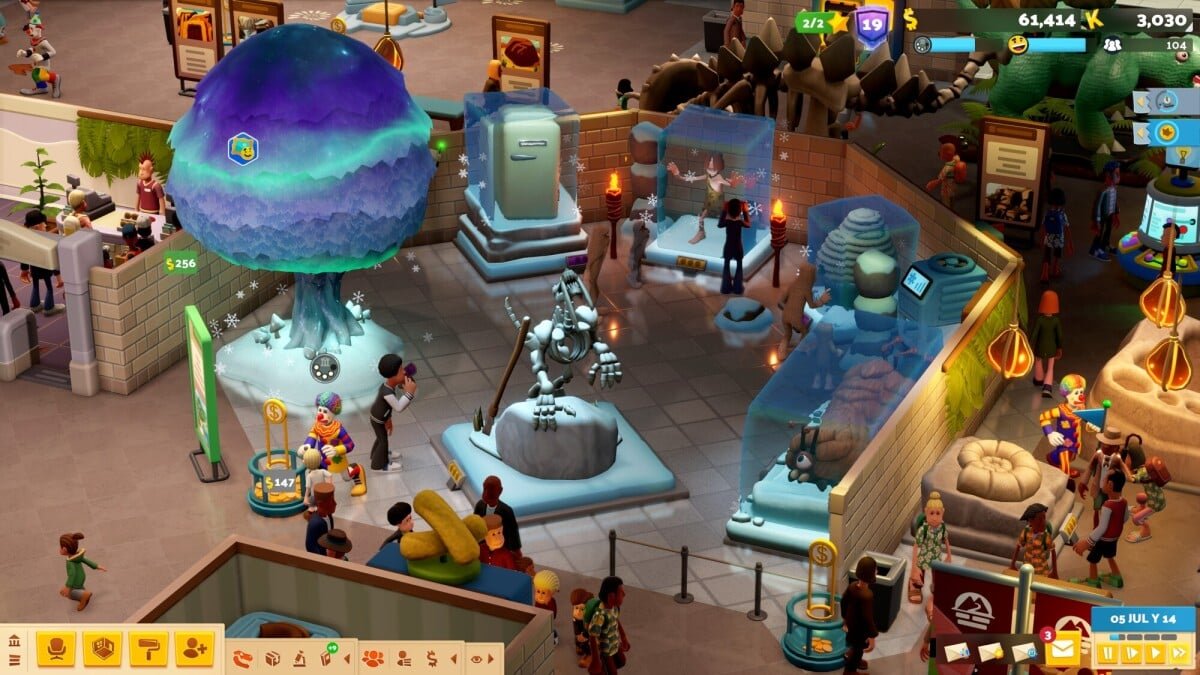
I recently had the opportunity to play a pre-release version of Two Point Museum for 10 hours, delving into three unique museum locations in the game’s preview campaign. From what I’ve experienced so far, this latest addition to the Two Point video game universe seems poised to be just as enjoyable as its popular predecessor, Two Point Hospital.
Developed by Two Point Studios, Two Point Museum maintains the same quirky vibe as both Two Point Campus and Hospital. In this installment, players get to construct and manage a museum, from collecting artifacts to curating displays and attracting impressed visitors with the promise of sweet cash.
Two Point Museum unveils exciting new exhibit themes
One of the most thrilling insights from my preview of Two Point Museum was the announcement of two additional exhibit themes. While I had the chance to explore Prehistory, Marine, Supernatural, and Botany exhibits, the preview also hinted at Science and Space themes. Though not playable yet, artifacts like the Time Portal and a fossilized time-traveler suggest futuristic tech may be on the horizon. Aliens even make a cameo in loading screens, sparking anticipation among fans for the introduction of Science and Space themes to complement the game’s zany world.
Speaking to Mashable, Two Point Museum’s design director Ben Huskins emphasized the importance of variety in exhibit themes, aiming to incorporate both real-world museum concepts and eccentric elements unique to Two Point County. Each theme offers new gameplay twists, challenging players to strategize and decorate their museums thoughtfully.
Two Point Museum introduces an intriguing new feature: loot box exploration
In Two Point Museum, acquiring artifacts for display is no simple task of purchasing them outright. The game introduces a new exploration feature, allowing players to send staff members on expeditions to locales like Bone Belt, Two Point Sea, or the Netherworld. Through a series of events based on the team’s skills and levels, players can uncover new artifacts that add to the museum’s collection. Upon discovery, artifacts are revealed in a loot box style, adding an element of excitement to the acquisition process.
Expedition map exploration is also shared across different museums, though artefact inventories remain separate. This means that if the experts in your marine-focused museum unlock a new location with a new specimen, you can jump over to your supernatural museum and send its staff there to find one for themselves. As such, Two Point Museum intends for players to bounce between their museums, continually returning to add exhibits rather than abandoning them in favour of the next location.
We murdered ghosts for science in Two Point Museum
Each expedition location has different specimens available, with some requiring multiple trips to find their various fragments. Combined with the search for Pristine quality specimens, you’ll likely end up with multiple copies of the same artefact. These duplicates may be sold, or kept in your inventory in case a wealthy collector wants to buy an exhibit. However, the specimens can also be examined in the Analysis Room’s aptly named Deconstructor. This device destroys the artefact to increase your Knowledge about it, which in turn boosts the Knowledge visitors gain from exhibit info stands — which all contributes to their review of your museum. Knowledge is quite literally power here.
Interestingly, specimens can be placed in the Deconstructor regardless of whether they’re living, dead, or undead. I initially hesitated to place poltergeists in the machine, feeling like a villain in a dystopian YA novel. However when I eventually capitulated in the name of this preview, I was surprised to see my doomed ghosts smiling placidly as their atoms were disassembled.
“Yeah, we had a few conversations about this,” Huskins told Mashable when asked about Two Point Museum deconstructing seemingly sentient beings. “We like to think of the analysis process as the ‘digitization’ of the exhibit. Sure, its physical presence is deconstructed, but it lives on as a stream of pure data. Hopefully people have watched enough episodes of Black Mirror to question what the metaphysical implications of this are for sentient entities, and how sinister or otherwise it might be.”
Fortunately, the ghosts are apparently as unperturbed as they appear, so you can dissolve them in the name of science with only mild guilt.
“Spirits are generally fairly happy with this process as they don’t have much of a physical presence anyway, and it’s considered slightly more comfortable than being sucked up by a janitor’s Ghost Duster device, as tends to happen elsewhere in Two Point County,” said Huskins.
Two Point Museum focuses on interior design
As I’ve mentioned, creating aesthetically pleasing rooms in Two Point games has never been a top priority for me. My interior design aspirations in Two Point Hospital were largely restricted to dotting pot plants everywhere solely to prevent my staff from getting grumpy.
Two Point Museum puts significant emphasis on customization and design as crucial to the museum visitor experience, so you can’t really approach these elements halfheartedly. The game encourages players not only to consider layout and how they position exhibits in proximity to each other, but also how they decorate the surrounding areas. Some decorations can even be altered via a color picker, a first for the Two Point series.
Decorations are essential for what the game calls Buzz. The right decor can boost the Buzz generated by an exhibit, particularly if you fulfill the requirements for an artifact’s Buzz Bonus. The more Buzz a guest has, the higher their donations and reviews of your museum will be. Like their real-life counterparts, Two Point’s museums tend to run primarily on donations.
When planning tours through your museum, selecting which exhibits your experts will stop at is crucial. Tours are more highly rated if they’re brief and coherent, consisting of artifacts that follow the same theme. Keeping exhibits appropriately grouped throughout your museum is rewarded, and the overall flow of the museum becomes more important as you build your collections. This means considering how exhibits work with walls, corridors, and open spaces.
During the preview, I was slightly frustrated that while Two Point Museum now allows players to build walls on an angle, you can’t build rooms along them. Unfortunately, there are currently no plans to support angular rooms, though the developers will monitor community feedback and continue to update the game post-release.
Two Point Museum drew inspiration from real museums
While Two Point Museum takes a playful approach to museum curation, the development team did draw inspiration from real museums. They were even invited to big museums in London, which inspired them to add features to the game based on real-life museum experiences.
Real museums have a controversial history, but Two Point Museum deliberately steers away from such matters, keeping its tone light and satirical. The game features cultural artifacts within the fictional world of Two Point County, allowing for a more fantastical and humorous approach to museum curation.
More to come with Two Point Museum
Two Point Studios is keeping some surprises under wraps for now. The idea of a first-person feature, allowing players to walk through their museums, is intriguing but may come later on. According to Huskins, they have a debug command for first-person view, but the lack of a ceiling can be unsettling and the bathroom visits are nightmare-inducing. However, they hope to refine it and possibly include it in the game in the future.
As the launch of Two Point Museum in March approaches, more exhibits, museums, and maps will be unveiled. The current build of the game is already exciting, with players enjoying the gameplay loop of collecting artifacts, arranging them in their museum, and decorating the space. Huskins is eager to see players’ reactions and hopes they will enjoy the game as much as they do.
Two Point Museum is set to be released on March 4 for PlayStation 5, Xbox Series X/S, and PC.